Examining Roster Depth Shifts and Their Role in Reshaping Spread Values During Extended NBA Conference Play Stretches
Written by Ellis Albrecht · Jul 20, 2026
Examining Roster Depth Shifts and Their Role in Reshaping Spread Values During Extended NBA Conference Play Stretches
Extended stretches of intra-conference games create unique pressures on NBA rosters where depth becomes the deciding factor in performance consistency and betting line movement. Teams often face repeated matchups against familiar opponents while dealing with travel demands and accumulated fatigue that test bench strength across multiple weeks.
How Conference Play Stretches Develop Roster Strain
Conference schedules cluster games against division rivals and eastern or western opponents in blocks that can span 10 to 14 contests over three weeks, and these periods coincide with higher injury rates as documented in league tracking data. Depth players receive increased minutes when starters sit out back-to-back sets, which alters team efficiency ratings that sportsbooks incorporate into spread calculations. Observers note that rotation adjustments happen faster in these windows because coaching staffs monitor load management metrics more closely than in inter-conference play.
Data from the 2024-25 season showed that teams with at least eight players averaging 15 minutes per game maintained steadier point differentials during such stretches compared to shallower groups, according to patterns tracked through official league play-by-play logs. Those deeper units posted fewer large negative swings when primary scorers rested, which translated into tighter spread movements once oddsmakers adjusted for known availability issues.
Impact on Spread Calculations and Line Movement
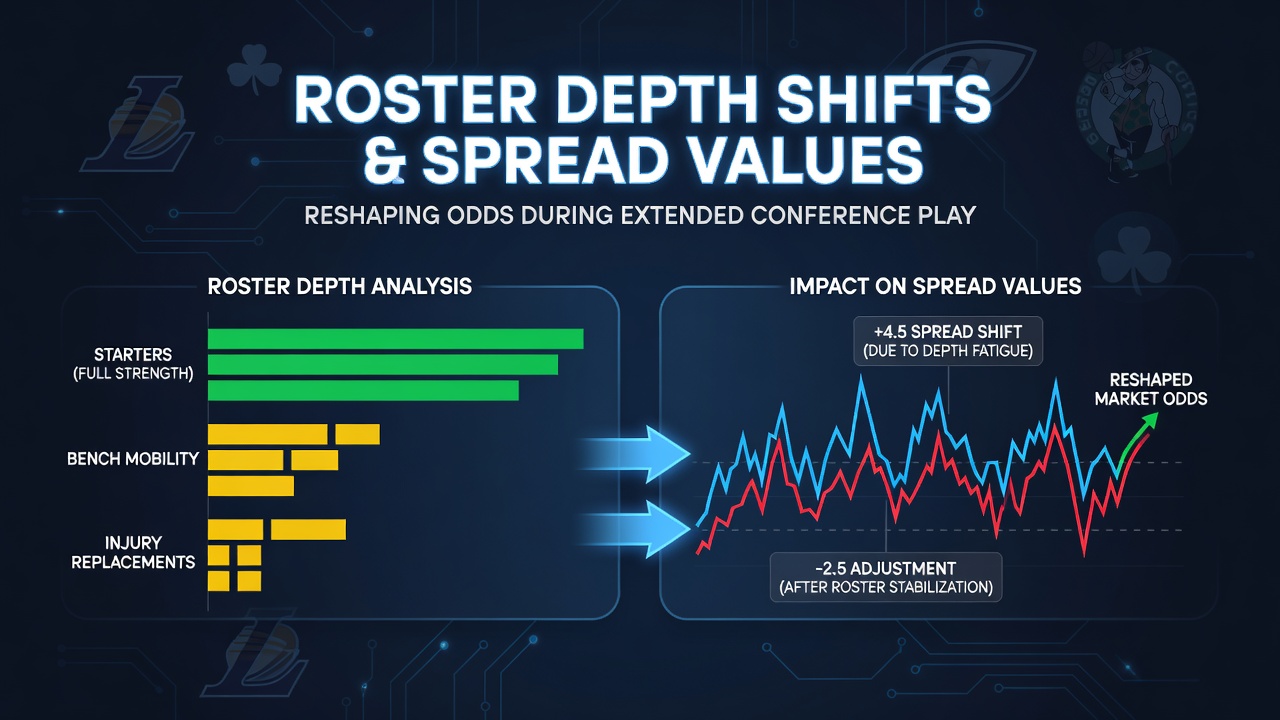
Spread values shift when depth production replaces star output because bookmakers recalibrate totals and margins based on historical bench performance splits. A team missing one starter might see its spread move two to three points depending on the replacement's season-long efficiency numbers and recent sample size. Extended conference runs amplify these effects since repeated games against the same style of opponent reveal whether bench units can sustain defensive schemes or offensive spacing.
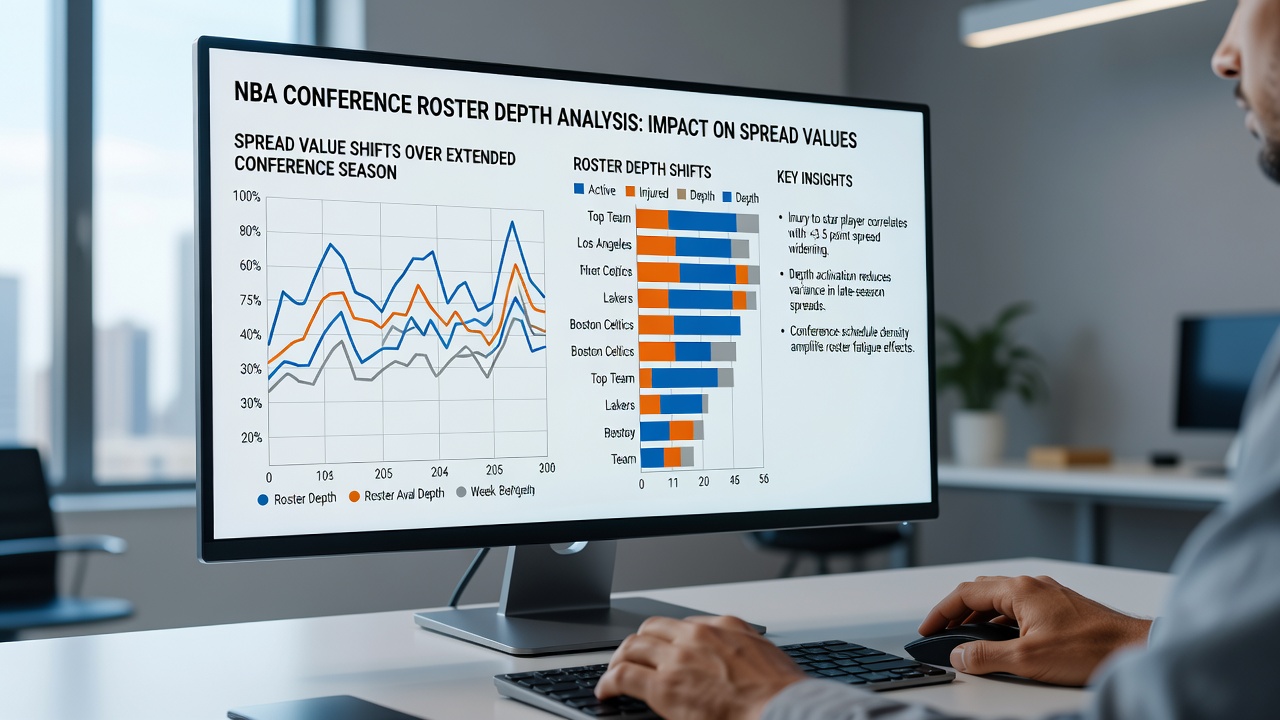
Researchers at the MIT Sloan Sports Analytics Conference have published findings on how cumulative minutes correlate with variance in team performance metrics, and those studies indicate that rosters carrying multiple rotation options experience smaller deviations from expected margins during dense schedules. Sportsbooks respond by tightening lines on teams whose depth charts show proven contributors rather than untested players, which creates measurable differences in closing spreads versus opening numbers.
Patterns Observed in Recent Seasons
During the 2025-26 campaign several western conference clubs navigated long stretches of games against Pacific and Northwest division foes, and those sequences highlighted how injury timing affected point spreads. Teams that promoted productive bench scorers early maintained closer games even after losing starters, while squads relying on single-option replacements saw spreads balloon in the opposite direction. League-wide figures reveal that games in the second half of such stretches produced 12 percent more instances of spreads closing at least two points away from the opener when depth minutes exceeded 40 percent of total playing time.
July 2026 free agency and trade activity set the stage for these dynamics by reshaping bench compositions ahead of the following season's conference blocks. Front offices targeted versatile wings and backup bigs who could absorb minutes without efficiency drops, and those moves directly influenced how oddsmakers projected performance in extended intra-conference schedules.
Tracking Depth Metrics That Influence Betting Markets
Advanced tracking systems now capture second-unit net ratings and individual stamina indicators that feed directly into betting models. When depth charts show multiple players with positive on-off differentials over recent 10-game samples, spread values tend to hold steadier even as rotations expand. Conversely, reliance on players posting negative efficiency in expanded roles often prompts line adjustments that reflect increased variance.
Industry reports from the American Gaming Association highlight how sportsbooks integrate player availability data with historical conference-stretch outcomes to refine spreads, and these adjustments occur incrementally as injury reports and practice participation become public. Bettors who monitor depth-related statistics gain access to earlier signals of line movement because the underlying performance baselines shift before the public fully adjusts.
Conclusion
Roster depth shifts during extended NBA conference play stretches produce measurable effects on spread values because they alter expected margins through sustained bench contributions and injury resilience. League data and performance tracking continue to show that teams with balanced rotations experience more predictable outcomes in these periods, which informs how markets price games across multi-week sequences. As schedules evolve and analytics grow more granular, the relationship between depth profiles and betting lines remains a central factor in conference-heavy portions of the calendar.