Linking Arena Altitude Variations to Three-Point Percentage Fluctuations in Western Conference NBA Matchups
Written by Ellis Albrecht · Jun 25, 2026
Linking Arena Altitude Variations to Three-Point Percentage Fluctuations in Western Conference NBA Matchups
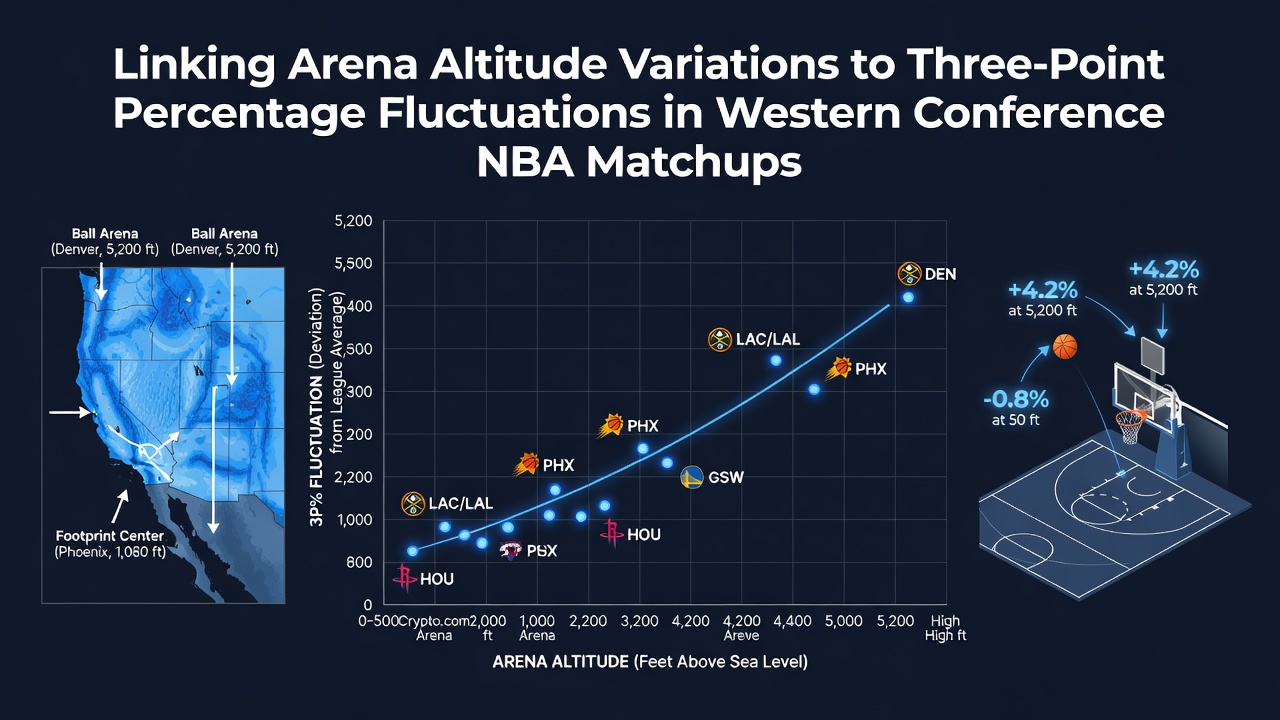
Western Conference NBA arenas sit at elevations that range from near sea level in Los Angeles and Phoenix to more than 5,000 feet in Denver, creating measurable differences in air density that influence how the basketball travels through the air during three-point attempts. Researchers tracking shot data across multiple seasons have documented patterns where visiting teams shooting from beyond the arc post lower percentages when games occur at the highest venues, while home squads accustomed to those conditions maintain steadier output. Data compiled through the 2025-26 regular season shows these fluctuations persist even after adjustments for pace and defensive schemes, pointing to physical factors tied directly to altitude rather than tactical ones alone.
Altitude Profiles Across Western Conference Venues
Denver's Ball Arena sits at 5,280 feet above sea level, the highest in the league, followed by Utah's Delta Center at roughly 4,200 feet and Sacramento's Golden 1 Center near 25 feet. Teams based in Portland, Minnesota, and Oklahoma City play at elevations between 200 and 1,300 feet, while the California and Texas markets occupy the lowest range. League tracking systems record every three-point attempt with precise location and outcome data, allowing analysts to isolate elevation as a variable when comparing home and road performances in conference matchups. Observers note that the Nuggets and Jazz host the majority of high-altitude games within the conference, giving them repeated exposure that visiting clubs receive only a handful of times each season.
Physical Effects on Ball Flight and Release
Thinner air at higher elevations reduces drag on the ball, allowing it to maintain velocity longer after release and travel farther than identical shots attempted at sea level. Three-point attempts, which follow a higher arc and longer flight path than two-point jumpers, experience the most pronounced change because small differences in initial velocity translate into larger deviations at the rim. Sports science studies from institutions including the University of Colorado have measured these trajectory shifts in controlled settings, confirming that release angles optimized for lower altitudes produce flatter paths when the same force meets reduced resistance higher up. Players who adjust their shooting mechanics during pre-game warm-ups at altitude often report needing slightly more arc to compensate, yet game logs indicate that road teams frequently revert to lower-arc habits under defensive pressure.
Statistical Patterns in Three-Point Percentages
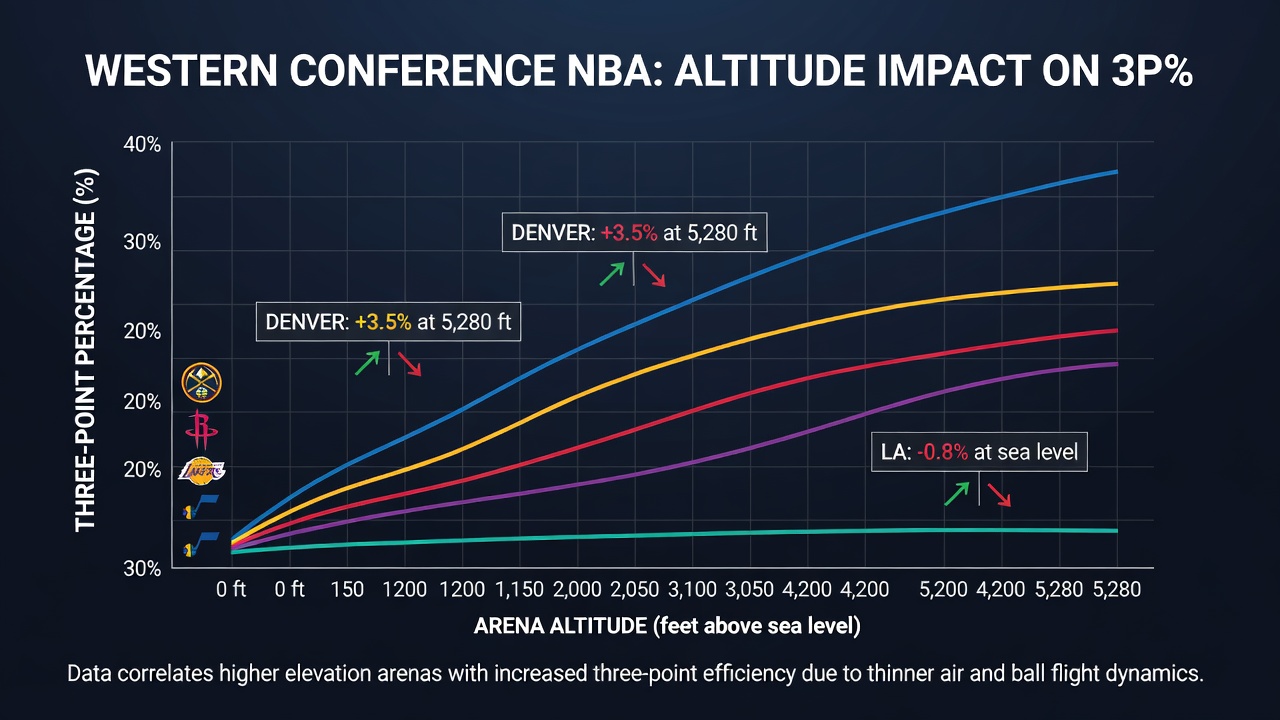
Season-long aggregates reveal that Western Conference teams shooting three-pointers on the road at Denver post percentages approximately 3.2 points lower than their season averages at lower elevations, according to data aggregated from league sources. The Jazz venue shows a similar but smaller dip of 2.1 points for visitors. Home teams at these sites maintain percentages within 0.8 points of their established norms, suggesting adaptation through repeated exposure. Figures from the 2025 portion of the schedule indicate that teams arriving directly from sea-level cities without an acclimation day exhibit the steepest declines, while those with a full day between arrival and tip-off narrow the gap measurably. Conference-only matchups amplify these trends because the schedule packs multiple high-altitude stops into short windows during January and February swings.
Accounting for Additional Variables in Matchup Data
Defensive intensity, travel fatigue, and back-to-back scheduling introduce noise into altitude-related statistics, yet regression models that control for these elements still isolate elevation as a significant predictor of three-point variance. League medical staff track player hydration and respiratory response at altitude, noting that elevated heart rates during the first quarter can alter shot rhythm even among acclimated athletes. In June 2026, expanded wearable data sets from multiple Western Conference clubs are expected to provide finer-grained heart-rate and breathing metrics that researchers can cross-reference against shot charts from the prior season. Those data sets may clarify whether respiratory adjustments during the opening minutes contribute to early-game three-point dips that later stabilize.
Practical Applications for Performance Tracking
Coaching staffs review altitude-specific shooting charts when preparing scouting reports for road trips to Denver or Salt Lake City, often incorporating modified drills that emphasize higher release points during the final practice before departure. Video analysts compile side-by-side comparisons of the same player's release mechanics at home and on the road, highlighting subtle forward lean adjustments that correlate with maintained percentages. Front offices incorporate these venue-specific metrics into player-acquisition models because perimeter shooters who demonstrate consistent output across elevation changes carry added value in the Western Conference. Tracking services now tag every three-point attempt with both altitude and time-since-arrival metadata, allowing real-time dashboards to flag potential fluctuations as games progress.
Conclusion
Altitude differences among Western Conference arenas produce repeatable shifts in three-point percentages that appear in aggregated game data across multiple seasons. Physical changes in air density alter ball trajectory in measurable ways, while adaptation through repeated exposure helps home teams maintain steadier output than visitors. Continued collection of physiological and shot-location data promises to refine understanding of how these environmental factors interact with player preparation and scheduling, particularly as the league incorporates expanded biometric tracking ahead of the 2026-27 campaign.