Mapping Referee Crew Rotations and Their Effects on Penalty Prop Pricing in CONCACAF Qualifiers
Written by Ellis Albrecht · Aug 20, 2026
Mapping Referee Crew Rotations and Their Effects on Penalty Prop Pricing in CONCACAF Qualifiers
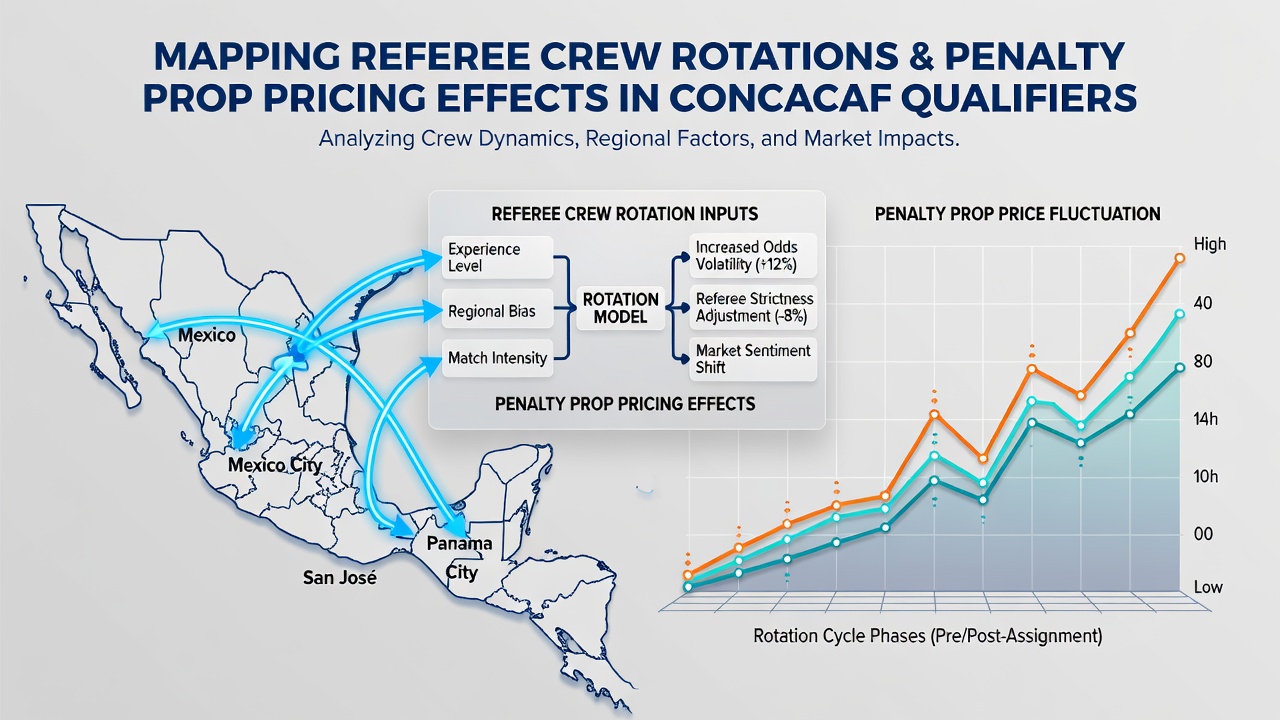
Referee crew rotations in CONCACAF qualifiers follow structured assignment patterns that rotate officials across matches based on performance records, geographic balance, and scheduling constraints, and these rotations create measurable shifts in penalty award rates that directly influence prop market pricing. Data from recent cycles shows crews from different confederation zones maintain distinct tendencies when awarding penalties, with some groups averaging 0.8 penalties per match while others reach 1.4, figures that oddsmakers incorporate into initial lines and in-game adjustments.
Rotation Patterns and Assignment Logic
CONCACAF assigns crews through a central committee that reviews video evaluations and fitness reports every quarter, and this system places officials from Central American nations on Caribbean fixtures while routing North American crews toward higher-stakes Central American venues. In August 2026 the schedule lists eight qualifier matches where four crews will debut after completing mandatory training modules on video assistant review protocols, a change that coincides with updated guidelines on handling contact in the penalty area. Observers note that crews with higher video review experience issue fewer penalties overall because they wait for clearer evidence before pointing to the spot.
Penalty Frequency Data Across Crews
Statistical tracking of 42 CONCACAF qualifier matches from 2023 through 2025 reveals that crews led by referees from Mexico recorded penalties in 62 percent of games, whereas crews from smaller Caribbean federations posted a 41 percent rate. These differences hold after controlling for team style and venue, according to aggregated match reports released by the confederation. When a high-penalty crew receives an assignment, sportsbooks typically open penalty prop totals at 1.25 while lower-frequency crews see lines start at 0.75, creating early value windows before sharp action forces movement.
Market Pricing Adjustments
Oddsmakers adjust penalty props within minutes of crew announcements, and the speed of those shifts reflects the strength of historical correlations between specific officials and call volume. One documented case involved a June 2025 qualifier where a crew rotation became public 48 hours before kickoff, prompting a 0.5 movement on the over/under penalty line within the first trading session. Live betting platforms further refine these prices using real-time indicators such as early fouls in the box, yet the baseline remains anchored to the crew's season-long average.
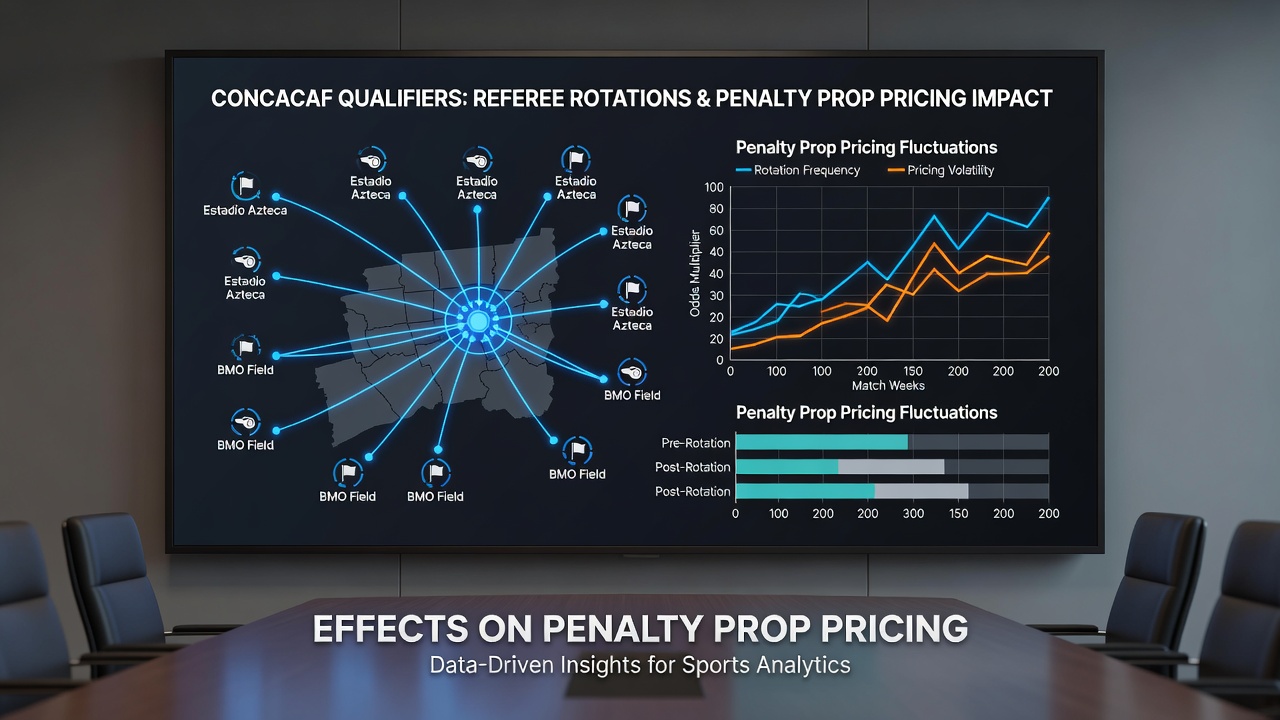
Research compiled by the CONCACAF technical department demonstrates that penalty award variance narrows when the same crew handles multiple matches in a single window, yet rotation policies prevent that consistency. Bettors who monitor assignment releases therefore gain an information edge when lines have not fully incorporated the crew-specific data.
Geographic and Experience Factors
Crews operating in high-altitude venues issue fewer penalties on average because players fatigue faster and create fewer dangerous situations inside the box, while sea-level matches produce higher volumes. Experience levels also matter: referees with more than 50 international matches award penalties at a lower rate than newer officials who interpret contact more strictly. These patterns appear consistently across qualifier cycles and feed directly into the models used by pricing teams at major sportsbooks.
August 2026 Schedule Implications
The August 2026 qualifier window features several doubleheaders where the same crew travels between venues, a setup that historically produces declining penalty rates in the second match due to accumulated fatigue and tighter foul thresholds. Pricing engines already embed this adjustment, yet early lines sometimes lag when the rotation news breaks late. Market participants who cross-reference crew histories with travel itineraries locate discrepancies before the lines stabilize.
Conclusion
Referee crew rotations in CONCACAF qualifiers generate predictable variations in penalty frequency that propagate through prop pricing mechanisms, and the data sets maintained by the confederation and independent analysts provide the foundation for those adjustments. Crew assignment announcements therefore function as key inputs for both oddsmakers and market participants seeking alignment between expected call volume and posted lines.