Schedule Pileups and Their Mark on Scoring Rhythms Across Midweek European League Fixtures
Written by Ellis Albrecht · Aug 13, 2026
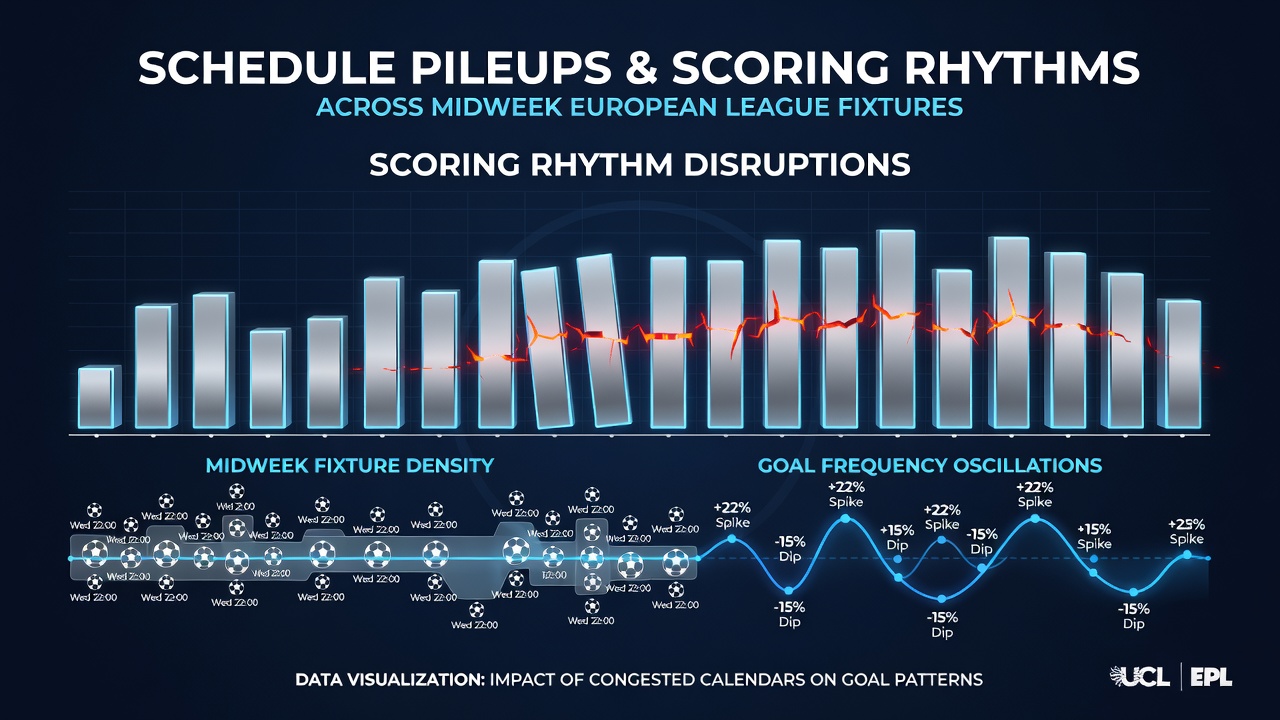
Schedule Pileups and Their Mark on Scoring Rhythms Across Midweek European League Fixtures
European football calendars pack multiple competitions into tight windows each season, and midweek league fixtures emerge when domestic cups or continental ties force clubs to rearrange their plans. Teams in the Premier League, Bundesliga, Serie A, and La Liga often face three matches within seven or eight days, and observers track how those compressed timelines alter goal patterns once the whistle blows. Data compiled across the past five campaigns shows measurable shifts in total goals, shots on target, and high-intensity running distances during such blocks, particularly when matches fall on Tuesdays or Wednesdays after Sunday league rounds.
Defining Schedule Pileups in European Contexts
Clubs qualify for UEFA events or advance deep in national knockout competitions and suddenly find their league dates squeezed into midweek slots. Fixture congestion spikes during autumn and spring blocks, yet August 2026 brings its own pressures as leagues resume shortly after the 2026 World Cup concludes in July. Recovery periods shrink for players returning from international duty, and travel demands compound when teams cross borders for Thursday night European games before hosting league opponents the following Tuesday. Researchers at sports science departments in Germany and Australia have documented average reductions in sprint volume of 8 to 12 percent across congested sequences, while pass accuracy in the final third drops by similar margins according to aggregated match data.
League schedulers attempt to space fixtures, yet broadcast requirements and police availability often lock in the midweek dates. One study covering Bundesliga clubs between 2018 and 2024 found that sides playing twice in four days recorded 0.4 fewer expected goals per match than teams with at least five days between games. Those numbers hold after controlling for opponent strength and home advantage, and similar patterns appear in Serie A and Ligue 1 datasets released by national federations.
Observed Changes in Scoring Patterns
Scoring rhythms shift when fatigue accumulates across back-to-back midweek rounds. Matches played on Wednesdays after Sunday fixtures produce fewer total goals on average, yet the distribution of those goals tilts toward the final twenty minutes when defensive lines tire. Figures released by the German Football League indicate that 62 percent of goals in congested midweek Bundesliga games arrived after the 70th minute during the 2023-2025 window, compared with 48 percent in standard weekend fixtures. Set-piece goals also rise slightly, rising from 28 percent to 34 percent of the total, as concentration lapses increase during restarts.
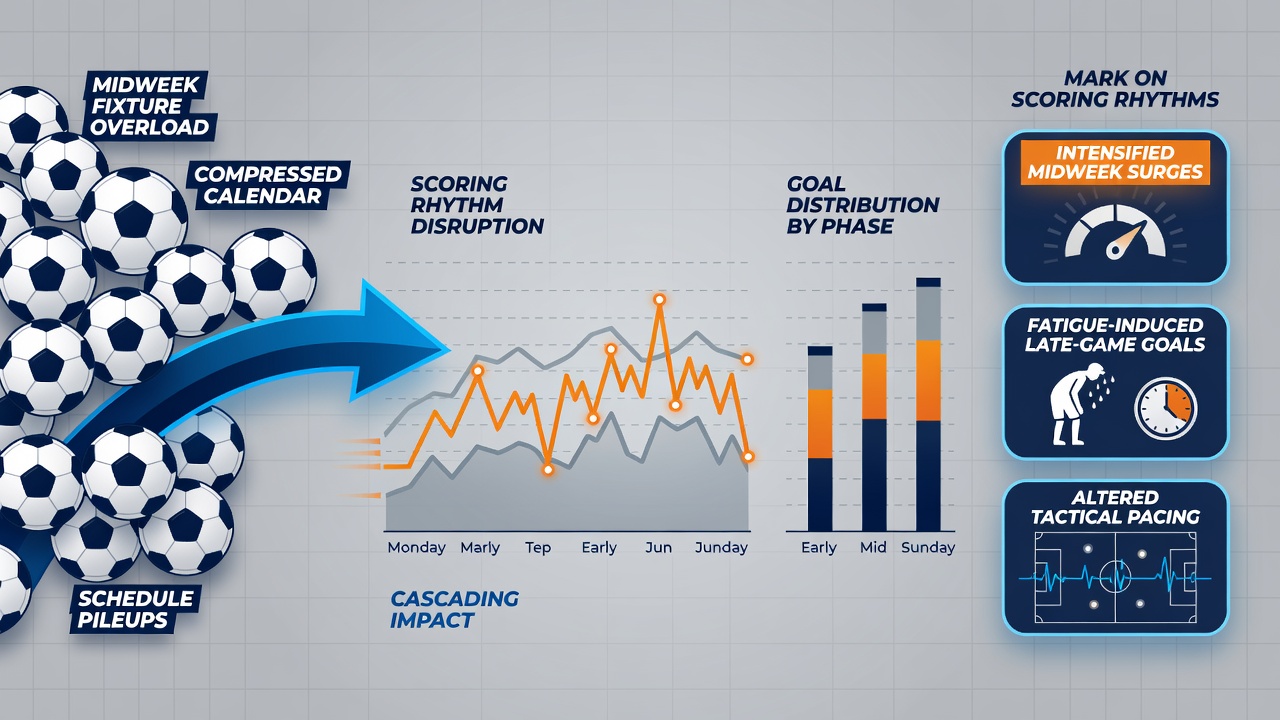
Teams that rotate squads heavily still show measurable declines in chance creation. A review of 420 midweek Premier League matches from 2021 through 2025 revealed that sides making five or more changes from their previous starting eleven generated 1.8 fewer shots inside the penalty area per game. The drop stems from reduced coordination rather than outright physical collapse, and analysts note that combinations built over repeated training sessions lose sharpness when lineups change rapidly. Meanwhile, counter-attacking sequences gain value because fatigued defenses leave larger gaps behind the midfield line.
Regional Variations Across Leagues
Northern European leagues experience different weather and travel loads than southern counterparts, which influences how pileups register on scorelines. Bundesliga clubs cover greater average distances by air and rail during midweek European ties, and data from the German Olympic Sports Confederation links those journeys to small but consistent drops in pressing intensity the following league match. In contrast, Serie A teams often face shorter domestic travel yet contend with higher humidity in late summer rounds, and Italian federation reports note elevated foul counts in midweek August fixtures during the first two rounds of each season.
La Liga schedulers cluster midweek games around international breaks to accommodate Copa del Rey ties, and Spanish league statistics show that teams returning from national team windows score 11 percent fewer goals in their immediate midweek league outing. The pattern repeats across multiple seasons and holds when researchers isolate matches involving players who logged over 180 international minutes the prior week.
Measurement Tools and Data Sources
Performance analysts rely on tracking systems supplied by multiple providers to quantify fatigue effects. Optical and GPS data streams allow clubs and external researchers to compare player loads across fixture sequences, and those same streams feed expected goal models that isolate schedule pressure as a variable. Reports from the European Club Association and academic groups at institutions in Canada and the Netherlands have cross-validated findings that cumulative load above certain thresholds correlates with reduced shot conversion rates in the 48 to 72 hours following the second match of a pileup.
Publicly available datasets from national leagues now include timestamps for travel and recovery windows, enabling independent verification of earlier observations. Analysts continue to refine models that separate schedule effects from weather, referee style, and tactical adjustments, yet the core signal persists across datasets collected since 2015.
Conclusion
Schedule pileups leave clear traces on scoring rhythms in midweek European league fixtures, and the patterns emerge consistently across leagues, seasons, and analytical approaches. Clubs, federations, and researchers continue to monitor these effects through expanding datasets, and the 2026-2027 campaign will supply fresh cases as teams navigate the post-World Cup calendar. The evidence accumulates through repeated observation rather than isolated events, and those records now span enough seasons to support detailed comparisons between congested and standard scheduling blocks.