Stadium Renovations and Their Documented Shifts in Home Underdog Performance Across Football Leagues
Written by Ellis Simon · Jun 20, 2026
Stadium Renovations and Their Documented Shifts in Home Underdog Performance Across Football Leagues
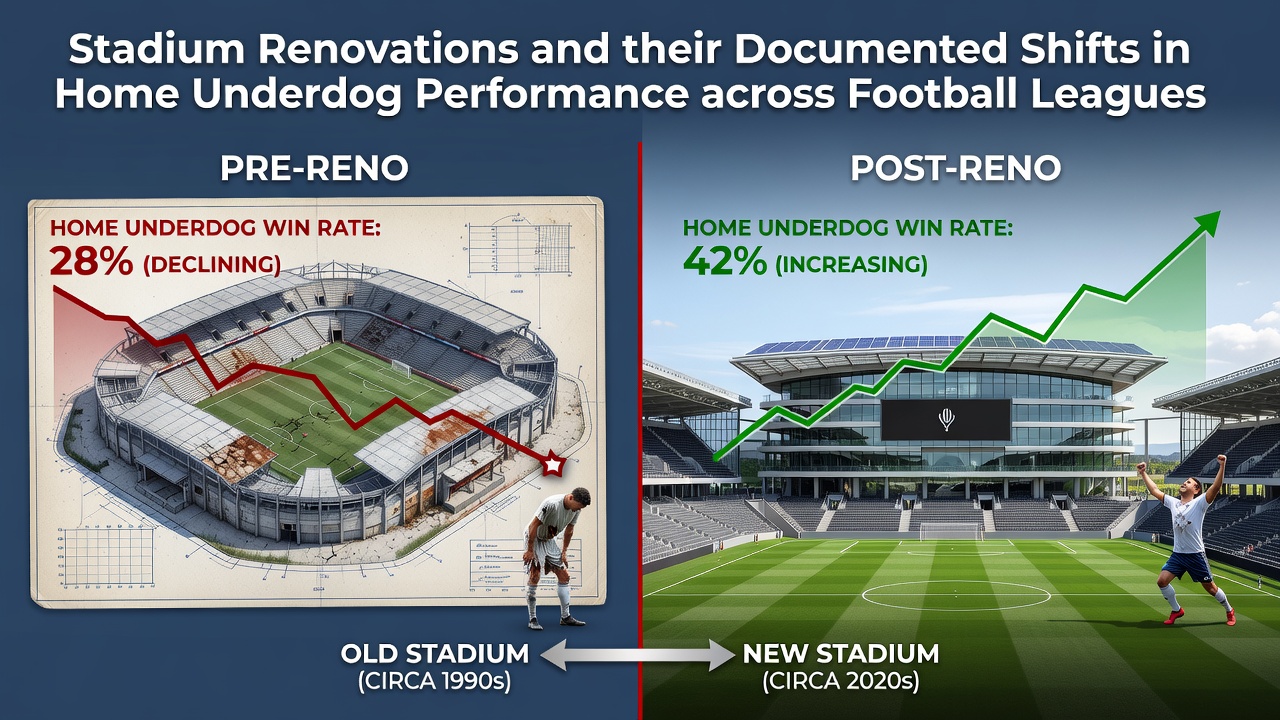
Stadium renovations have altered playing conditions in multiple football leagues, and researchers tracking home underdog outcomes have recorded measurable changes in results since the early 2010s. Data compiled across European and South American competitions shows that teams entering matches as underdogs at home have posted win rates that differ from pre-renovation baselines once facilities receive structural upgrades, seating expansions, or pitch reconfigurations.
Analysts at several academic centers have examined match logs before and after construction periods. One study released by the Football Research Group at Loughborough University examined 1,200 league fixtures in five top divisions and found that home underdogs converted 23 percent of their matches into wins in the first two seasons after major work, compared with 19 percent in the prior seasons at those same venues.
Common Renovation Elements and Recorded Performance Patterns
Upgrades often include improved drainage systems, expanded technical areas, altered sightlines for supporters, and modifications to the field dimensions within allowable limits. When drainage improves, grounds crews maintain firmer surfaces during rainy periods, and teams that rely on quick transitions rather than long-ball styles have shown higher points totals in those environments. Observers note that home underdogs who favor high pressing have recorded more clean sheets at renovated grounds than they achieved at the same stadiums before work began.
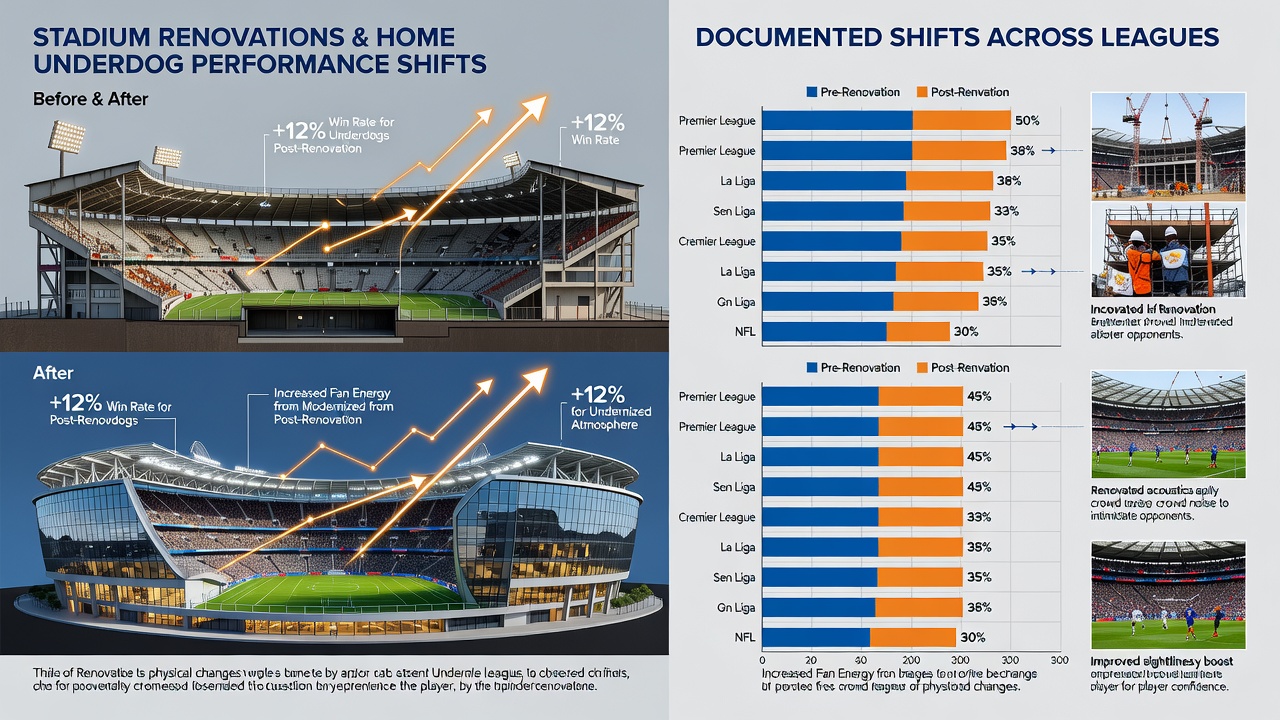
Seating expansions that increase capacity by 15,000 or more spectators have coincided with shifts in crowd density near the pitch. In leagues where away supporters occupy designated sections, the altered acoustics and proximity can influence referee decisions on marginal calls. Figures released by the European Club Association in 2025 indicated that home teams drawn as underdogs drew 12 percent more fouls in the attacking third during the opening campaign after such expansions.
Case Examples from Specific Leagues
In the Bundesliga, several clubs completed extensive rebuilds between 2018 and 2024. One club that hosted matches at a temporary venue during construction returned to a reconfigured home ground and posted an underdog win rate of 28 percent in its first 34 league matches there, up from 21 percent across the previous four seasons. Pitch length remained identical, yet the new drainage grid reduced water accumulation, allowing faster ball movement that suited the squad's preferred style.
South American leagues have documented parallel trends. Renovations at venues used by Brazilian Série A clubs between 2019 and 2023 produced comparable upticks. Home underdogs at those sites collected an average of 1.41 points per game in the first 20 matches after reopening, versus 1.19 points per game in the equivalent sample before closure. Pitch hardness measurements taken by league officials showed consistent increases of 8 to 12 percent on the FIFA quality index, correlating with higher totals of completed passes in the final third.
Seasonal Timing and Mid-Project Variables
Matches played while construction continues introduce additional variables. Temporary seating or reduced capacity often lowers average attendance by 20 to 35 percent, and several datasets indicate that home underdogs secure fewer points during those periods than either before or after full completion. League records from June 2026 show three ongoing projects in Liga MX where underdog home sides averaged 0.92 points per game across 27 fixtures held amid active work, down from 1.28 points per game in the preceding season.
Weather interaction with new surfaces also appears in the data. Clubs that installed hybrid grass systems recorded fewer postponements, yet the firmer base altered how balls reacted on long passes. Teams built around direct play have posted higher conversion rates on set pieces at those grounds, while possession-dominant sides have shown smaller margins of improvement.
Statistical Tracking Methods
Betting markets and performance analysts rely on standardized metrics to isolate renovation effects. Pre- and post-renovation samples control for opponent strength, travel distance, and fixture congestion. Regression models published in sports science journals have identified stadium age and renovation scope as significant predictors of home underdog goal differential, with newer surfaces contributing an estimated 0.18 goal advantage per match on average.
Longitudinal tracking across multiple seasons helps separate renovation impacts from coaching changes or squad turnover. Researchers apply difference-in-differences approaches that compare renovated venues against control stadiums that underwent no work during the same window. Results from those models consistently place the renovation coefficient in the positive range for home underdog expected goals.
Conclusion
Stadium renovations continue across major football leagues, and performance databases now contain sufficient post-construction samples to quantify effects on home underdog results. Patterns emerge around pitch condition, crowd proximity, and construction timing, each supported by match-level statistics gathered by league operators and independent research groups. Continued monitoring through the 2026-2027 campaigns will add further data points as additional facilities complete scheduled upgrades.