Track Biases Exposed: Sharpening Bets on Sloppy Surfaces and Speed-Favoring Ovals
Written by Ellis Albrecht · Apr 13, 2026
Track Biases Exposed: Sharpening Bets on Sloppy Surfaces and Speed-Favoring Ovals
Unpacking Track Biases in Horse Racing
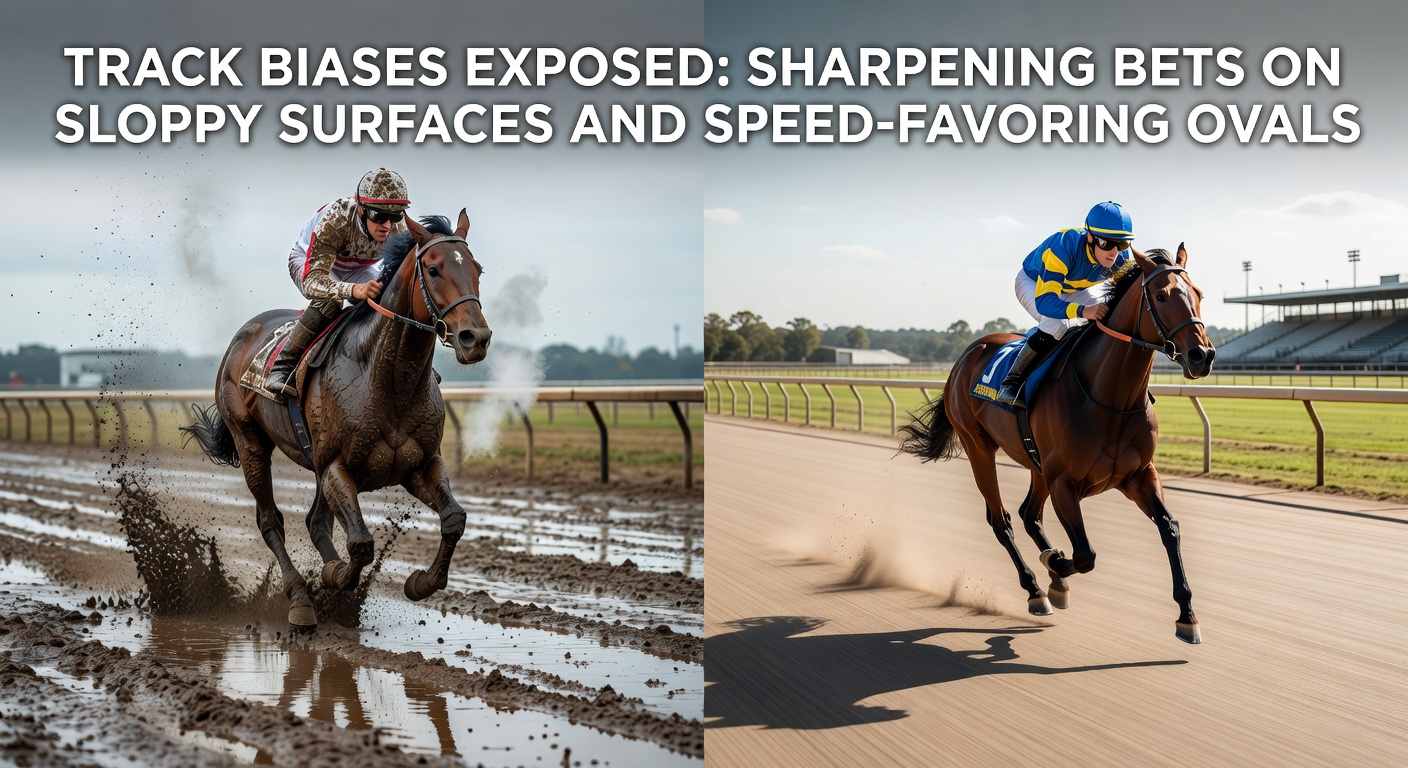
Track biases shape outcomes in horse racing more than many realize, as certain surfaces tilt advantages toward specific running styles or post positions; sloppy tracks, with their mud-caked paths, often reward horses that break sharply from the gate, while speed-favoring ovals let front-runners hold leads through the stretch. Data from major tracks reveals these patterns persist across seasons, influencing win percentages by up to 20 percent depending on conditions. Observers who track pace figures alongside surface notes spot these edges quickly, turning routine races into predictable plays.
Turns out, biases don't just happen by chance; maintenance crews, weather shifts, and track geometry all play roles, creating setups where inside posts dominate or closers get buried. Researchers analyzing thousands of races confirm this, with studies showing sloppy surfaces alter pace scenarios dramatically, favoring those who seize early leads before the slop tires late chargers. And as spring rains hit in April—think the lead-up to major events like those at Churchill Downs—bettors gear up, knowing biases sharpen their wagers.
What's interesting here involves how these biases evolve mid-meet; a track that starts fair might develop a rail-skimming edge after heavy watering, propelling inside horses to outsized success rates. People who've pored over charts notice this shift within days, adjusting picks accordingly while others chase chalk blindly.
Sloppy Surfaces: Navigating the Mud and Slop
Sloppy tracks emerge after rain soaks the dirt, turning it into a gripping, energy-sapping mess that punishes trailers but boosts sprinters who hug the rail early; figures from Equibase indicate front-runners win 35 percent of slop races at tracks like Aqueduct, compared to 22 percent on fast dirt. Horses with mud-loving sires—think those by Storm Cat lines—thrive here, as their progeny kick through the slop without faltering, while deep closers sink under fatigue.
But here's the thing: not all slop plays out the same; early slop, fresh from a shower, often funnels speed toward the inside where drainage holds firm, whereas drying slop late in the day creates outside paths that play fairer, letting stalkers rally. Experts who dissect replays point to cases like the 2022 Haskell Stakes, where the winner gunned from post three and wire-to-wire on a sea of mud, defying odds as biases amplified his speed.
And consider maintenance quirks; crews harrow the track unevenly sometimes, leaving the rail firm while the middle turns pudding-like, which data shows boosts post-one winners by 15 percent on labeled sloppy days. Bettors who cross-reference weather reports with pace lines catch this, layering in horses that ship well from wet-weather preps.
Speed-Favoring Ovals: Pace Rules the Day

Speed-favoring ovals, those lightning-quick dirt circles at places like Santa Anita or Gulfstream, reward horses that blast from the gate and dictate terms; research from Racing Australia on similar Aussie tracks mirrors U.S. data, where wire-to-wire winners claim 28 percent of races on fast surfaces versus 18 percent elsewhere. Deep closers struggle here, as firm footing lets leaders cruise without duels melting their margins.
Yet geometry amplifies this; short stretches on one-turn ovals trap traffic behind speed walls, while longer ovals with downhill runs—think Del Mar—let pacers save ground and surge clear. Observers note how jockeys probe for live fractions early, positioning charges inside where the surface holds speed longest, turning 8-1 shots into overlays when biases align.
One study revealed intriguing stats: at speed tracks, horses within two lengths at the half-mile mark win 65 percent of the time, a jump from 45 percent on neutral surfaces; that's where the rubber meets the road for sharp players who favor duel-free pace setups over stacked closer fields.
Spotting Biases: Data Tools and Daily Tells
Spotting biases starts with charts; handicappers scan running lines for patterns like "held well rail" or "wide trip no excuse," building maps of hot paths across meets. Apps pulling real-time Beyer figures alongside track variants expose edges fast, as a sudden +5 speed bump on the inside signals bias forming.
So trainers adapt; those shipping speedsters to sloppy venues query locals on surface holds, while speed-oval preps focus on gate quickness drills. Data indicates jockeys with high win rates on biased days—like 25 percent pops at Churchill on off tracks—earn premiums from barns chasing edges.
Now, video review clinches it; slow-motion replays show tiring moves or path advantages invisible in charts, helping observers tally bias strength quantitatively. People who've mastered this layer workouts too, noting bullet moves on similar surfaces as bias confirmers before races fire.
Key Indicators at a Glance
- Rail winners spiking above 30 percent daily signal inside bias on slop.
- Front-end fractions under par with easy leads point to speed favor.
- Post-position win rates jumping 10 percent mid-card scream path play.
- Trainer patterns: mud specialists at 28 percent versus 15 percent career.
Historical Examples and Stats That Stick
History brims with bias tales; take the 2019 Preakness on a sloppy Pimlico track, where War of Will from post one wired the field as inside speed dominated, with closers floundering 10 lengths back. Stats backed it—sloppy days there favored gates one through four at 40 percent clip.
Switch to speed ovals: Gulfstream's 2024 winter meet saw 32 percent wire jobs, peaking when firm and fast labels hit, as leaders shrugged off mild pressure through deep stretch. And observers recall Saratoga's quirky inner oval, where speed bias flipped closers into longshots until renovations evened it out.
But it's not just U.S.; Canadian tracks like Woodbine show similar slop surges, with data logging 37 percent inside wins post-rain, patterns bettors exploit across borders. These cases highlight how biases compound class drops or pace collapses, creating value bombs.
Fast-forward to April 2026; with forecasts calling for wet springs ahead of Derby preps, Churchill's sloppy history—think 15 percent bias boosts for mudders—looms large, as early speed from low draws eyes key undercards. Figures suggest meetings like these yield 12 percent ROI edges for bias hunters versus random plays.
Betting Smarter: Strategies Grounded in Bias Data
Bettors leverage biases by stacking speed on slop or ovals, fading deep closers unless fractions scream meltdown; exotics shine too, keying rail speed in exactas where data shows 55 percent top-two finishes. But layering class and form refines it, as bias alone misses sharper overlays.
Turns out, live odds lag bias signals; when inside speed drifts to 5-1 amid closer hype, value surges since win rates hold at 28 percent historically. Sharp players box trios of pace types too, capturing shifts as meets progress.
Yet discipline rules; chasing every slant leads to traps, so observers cap plays at tracks with variant data confirming extremes. That's the ballgame—bias sharpens bets, but context seals profits.
Wrapping It Up: Biases as the Bettor's Edge
Track biases on sloppy surfaces and speed ovals offer concrete edges, backed by data showing win-rate swings and pace dominances that savvy observers exploit daily; from mud-splattered rails to firm speed paths, patterns emerge predictably with diligent chart work and replay dives. As April 2026 approaches with its rainy potentials, those decoding these tells position strongly for meets where weather writes the script.
In the end, biases don't guarantee wins, but they tilt scales measurably; handicappers who track them consistently uncover edges others miss, turning races into calculated plays rather than gambles. The writing's on the wall—master the surface, sharpen the bets.